

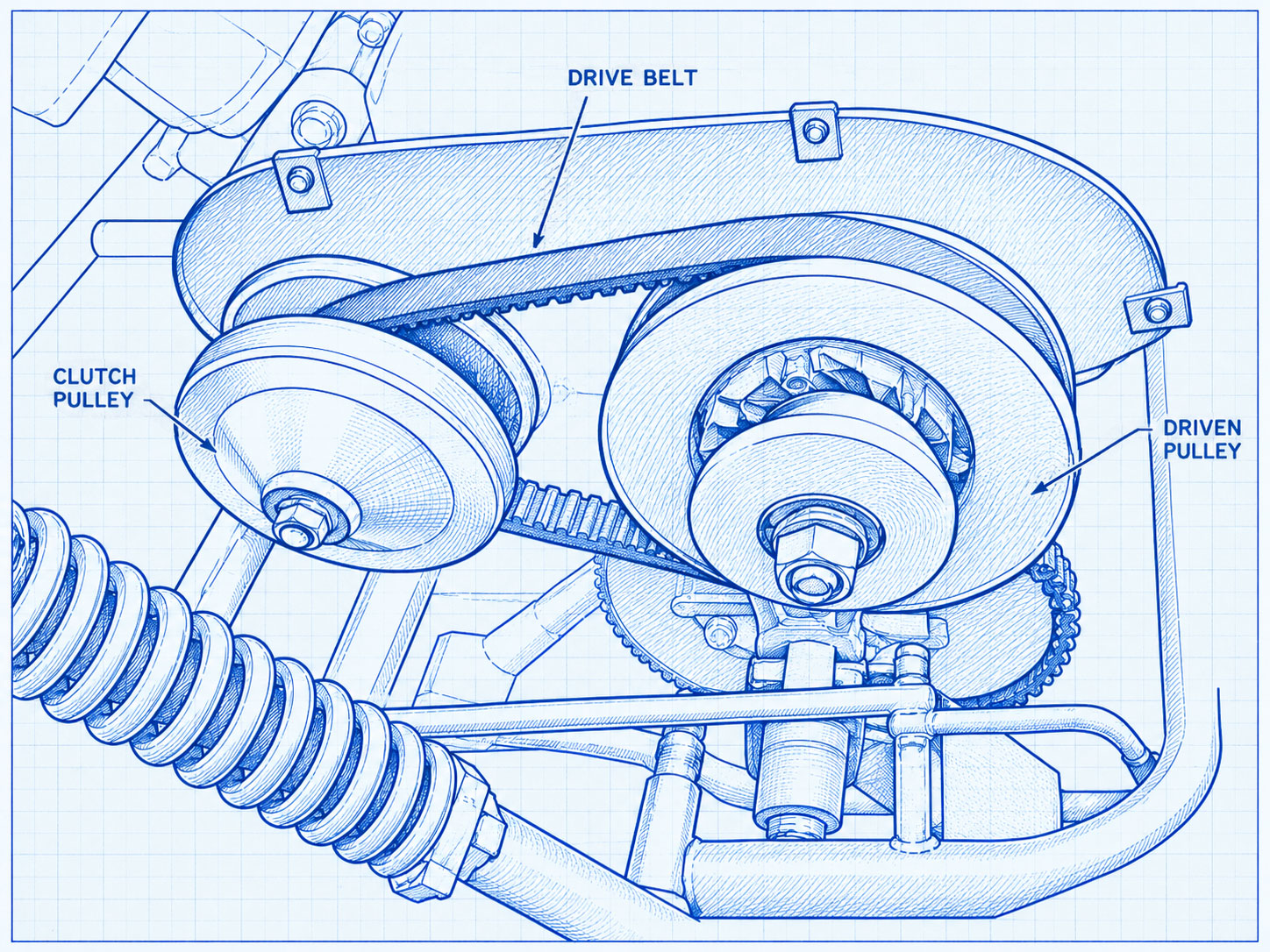
Go-Kart Clutch & Torque Converter Troubleshooting Guide
Having trouble with a go-kart clutch or torque converter? This troubleshooting guide can help you identify common causes of idle creep, rapid belt wear, poor acceleration, erratic engagement, and low-speed performance problems.
| Problem | Possible Causes to Check |
|---|---|
| Kart moves while engine is idling | Clutch condition, drive chain, belt installation, belt selection, pulley condition, spacing, alignment, or engine idle speed |
| Torque converter belt wears quickly | Belt installation, incorrect belt, overload, brake drag, pulley condition, alignment, or binding components |
| Poor, sluggish, or jerky acceleration | Drive system, throttle cable, chain, brake/bearing/axle drag, or engine operation |
| Erratic engagement | Driver clutch, flyweights, movable sheave, hub, or lubrication/contamination |
| Poor low-speed performance | Throttle adjustment, brake/bearing/axle drag, drive system, tire pressure, or engine operation |
1. Kart Moves While the Engine Is Idling
A go-kart should not move while the engine is idling. If the kart begins moving without applying the throttle, check the following areas.
Clutch-Equipped Karts
- Worn, overheated, or abused clutch - NOT OILED: Inspect the clutch for signs of wear or overheating and verify that it has been properly maintained.
- Drive chain too tight: Check the chain adjustment and make sure the chain is not excessively tight.
- Engine idle set too high: Check the engine idle speed and adjust it if necessary.
Torque Converter-Equipped Karts
- Drive belt installed wrong: On 30 Series systems, the flat side of the belt should be toward the engine.
- Wrong drive belt installed: A belt that is too short can cause the machine to creep while the engine is idling.
- Malfunctioning driver pulley: Inspect the pulley mounted on the engine crankshaft.
- Malfunctioning driven pulley: Inspect the driven pulley mounted on the jackshaft.
- Incorrect driver pulley spacing: Verify that the driver pulley is positioned correctly on the engine crankshaft.
- Engine idle too high: Check the engine idle speed.
- Pulleys not aligned: Check the alignment between the driver and driven pulleys. Misalignment can also contribute to premature belt wear.
2. Torque Converter Belt Is Wearing Out Quickly
Rapid belt wear can be caused by incorrect installation, an incorrectly sized belt, excessive loads, pulley problems, or components that are dragging or binding.
- Drive belt installed wrong: On 30 Series systems, the flat side of the belt should be toward the engine.
- Wrong drive belt: Verify that the correct belt is being used for the torque converter system.
- Overloading the drive system: Steep hills and heavy loads can place additional stress on the drive system.
- Riding the brake: Avoid keeping the brake partially applied while driving.
- Malfunctioning driver pulley: Inspect the driver pulley for proper operation and condition.
- Malfunctioning driven pulley: Inspect the driven pulley for proper operation and condition.
- Binding or dragging brake, bearings, or axle: Check the kart for components that are creating excessive resistance.
- Pulleys not aligned: Check driver and driven pulley alignment.
- Additional belt-drive troubleshooting: Use the appropriate belt-drive troubleshooting chart for additional checks.
3. Poor, Sluggish, or Jerky Acceleration
If the kart does not accelerate smoothly or feels sluggish, inspect the complete drive system rather than focusing on only the clutch or torque converter.
- Malfunctioning drive system: Inspect the torque converter components and drive system for proper operation.
- Throttle cable not properly adjusted: Check the throttle cable adjustment and operation.
- Unlubricated, loose, or worn drive chain: Inspect the chain for proper lubrication, adjustment, and condition.
- Binding or dragging brake, bearings, or axle: Check for anything that may be creating excessive resistance.
- Engine not functioning properly: If the drive system checks out, inspect the engine for proper operation.
4. Torque Converter Engagement Is Erratic
Erratic engagement is most often associated with the driver clutch mounted on the engine crankshaft. The flyweights may be sticking, or the movable sheave may be binding on the hub.
How the Driver and Driven Pulleys Operate
As engine RPM increases, the flyweights push against the outer drum and force the movable sheave toward the engine. This causes the belt to travel at a greater circumference around the driver clutch.
The movement of the belt then forces the driven pulley open, allowing the belt to travel at a lesser circumference around the driven pulley.
As RPM decreases, the spring in the driven pulley closes the pulley. This forces the belt to a greater circumference around the driven pulley. The spring force overcomes the flyweight force and opens the driver clutch, allowing the belt to travel at a lesser circumference.
5. Check the Movable Sheave
The movable sheave must slide freely on the splined hub without binding. If the sheave does not move freely, the driver clutch may engage incorrectly or operate erratically.
Cleaning the Driver Clutch
If the driver clutch is sticking or contaminated, disassemble the driver clutch and clean dirt and lubricant residue using an automotive parts cleaning solvent.
Lubrication
Do not use petroleum-based lubricant inside the driver clutch or between the hub and movable sheave. The guide recommends using a dry molybdenum-based lubricant.
Petroleum-based lubricant can char under extreme heat and pressure and collect dirt, which can contribute to wear.
Graphite is another option, but it can eventually leave residue that builds up and causes binding, resulting in more frequent cleaning.
6. Poor Low-Speed Performance
If the kart has difficulty maintaining or achieving proper low-speed performance, check the following:
- Throttle cable not properly adjusted: Verify the throttle cable adjustment.
- Binding or dragging brake, bearings, or axle: Inspect these components for excessive resistance.
- Malfunctioning drive system: Inspect the clutch or torque converter and related drive components.
- Improper tire pressure: Check and correct tire pressure as needed.
- Engine not functioning properly: Verify that the engine is operating correctly.
Quick Troubleshooting Checklist
- Is the engine idle speed set correctly?
- Is the correct drive belt installed?
- Is the belt installed in the correct direction?
- Are the driver and driven pulleys properly aligned?
- Is the driver pulley spaced correctly?
- Are the pulleys operating correctly?
- Is the drive chain properly adjusted and lubricated?
- Are the brakes, bearings, and axle free from excessive drag?
- Can the movable sheave slide freely on the hub?
- Is the driver clutch clean and free from contamination?
- Is the engine operating properly?
- Are the tires inflated properly?
When to Inspect the Clutch or Torque Converter
If basic adjustments do not solve the problem, inspect the clutch or torque converter components for wear, overheating, contamination, binding, or improper installation. Pay particular attention to the driver and driven pulleys, belt condition, pulley alignment, and the movement of the driver clutch's movable sheave.
Troubleshooting the entire drive system can help identify whether the problem is actually coming from the clutch or torque converter, or from another component such as the chain, brakes, bearings, axle, throttle cable, tires, or engine.


